case study / colour and psychological perspective
Solitary (2026) / Psychological short film / Colourist
Solitary
Colour and psychological perspective.

production role
production role
Introduction and credits
Solitary is a psychological short film following Roland, a military veteran whose experience of the wilderness becomes unstable after the disappearance of his dog, Shepard. Memories around Zack's death intrude on his perception of the present.
- Colourist
- Sophie Joyce
Full credits are listed below.
responsibilities
responsibilities
My responsibilities as colourist
I was responsible for the look of the film in grade: building the colour approach, applying it consistently across scenes and keeping it in service of the story. That covered shot matching, exposure correction, skin-tone accuracy, foliage treatment and the integration of stock footage.
Creative objectives
Colour separates three states: the real world, traumatic memory and distorted perception. The grade changes enough for an audience to feel the difference, without overriding the natural look of the photography.
Technical workflow
- Software
- Adobe Premiere Pro
- Grading tool
- Lumetri Color
- Colour space
- Rec.709
- Project
- An organised grading project holding successive grade versions, chart references for each movement and for the show look
- Movement LUTs
- Grounded, Threat, Rupture and Re-entry
- Unifying look
- One show look held across the film
Four narrative grading movements
- GroundedThe film's recognisable physical world.
- ThreatTension enters the same environment.
- RupturePerception breaks from the present.
- Re-entryThe return from distortion.
Movement LUTs and one show look
Each movement has its own LUT treatment. A single show look holds them together, so the film still reads as one world.

Matching and accuracy
Shots were matched and exposure corrected so cuts held. Skin tones were kept accurate, foliage was treated so the forest stayed credible, and stock footage was brought into the same world as the original photography.
The daylight flashbacks
The bright daylight look of the flashbacks to Zack's death was a particular problem: it had to feel different from the present without becoming a separate film.
Memory, distortion and apparition
Three things needed to read differently on screen: traumatic memory, present-tense perceptual distortion and the apparition of Zack. Variations in contrast, temperature, saturation and tonal separation were the tools explored.
Feedback and revision
Where the finished cut differs from the original vision edit (the V3 cut by the film's credited editor), I worked on how the reaction and memory passages are selected, timed and finished. In the Roadside Distress passage, the memory images fall from 242 frames to 110 frames, about 10.09 seconds to 4.59 seconds. Reaction framing, existing speed changes, zooms and blur effects remain.
The original MP4 was baked, so the editor's original effect settings cannot be recovered from it. These comparisons show different selected frames and timing, not recovered settings.
evidence of practice
evidence of practice
Evidence: the grade, measured
The four movements were allowed to change the mood of the film, but not its black floor, whites, skin or neutral axis. Each rule below was tested against the show look in every movement.
| Check | Rule | Result across the four movements |
|---|---|---|
| 01Black floor | Scene black set to #0A0A0A (10/255), neutral, in every movement | Held at 10/255 in the show look and all four movements |
| 02Bone white | Scene white identical to the show look (ΔE00 of 1.0 or less) | 0.00 to 0.02 across the four movements |
| 0318% grey | Within ±3 L* of the show look, chroma 4 or less | Within tolerance in all four movements |
| 04Skin hue line | All 8 skin patches within ±6° hue of the show look (±8° in movement 3) | Maximum 2.9° to 3.9° |
| 05Skin colour | Dark and light skin ΔE00 against the show look within set limits | ΔE00 1.3 to 3.1 |
| 06No magenta | Magenta, purple and blue-flower chroma at 75% or less of the physical chart | 49% to 66% |
| 07Neutral axis | Grey ramp tints stay subtle: chroma 7 or less anywhere on the ramp | Maximum chroma 3.4 to 6.7 |
| 08Contrast budget | −2 to +2 stop span within 0.88 to 1.20 times the show look | 0.97 to 1.03 times |
Source: Sophie's grade tracker for Solitary. Colour measured against a ColorChecker chart.
Before and after: Pre-correction and retained correction


Before and after: Blood and Sap


Blood and Sap is a dedicated portfolio re-edit that uses rendered custom finishing assets. Those controls are not Lumetri slider values.
Before and after: Roadside Distress


Premiere workflow screens


Directional Lighting test (rejected)
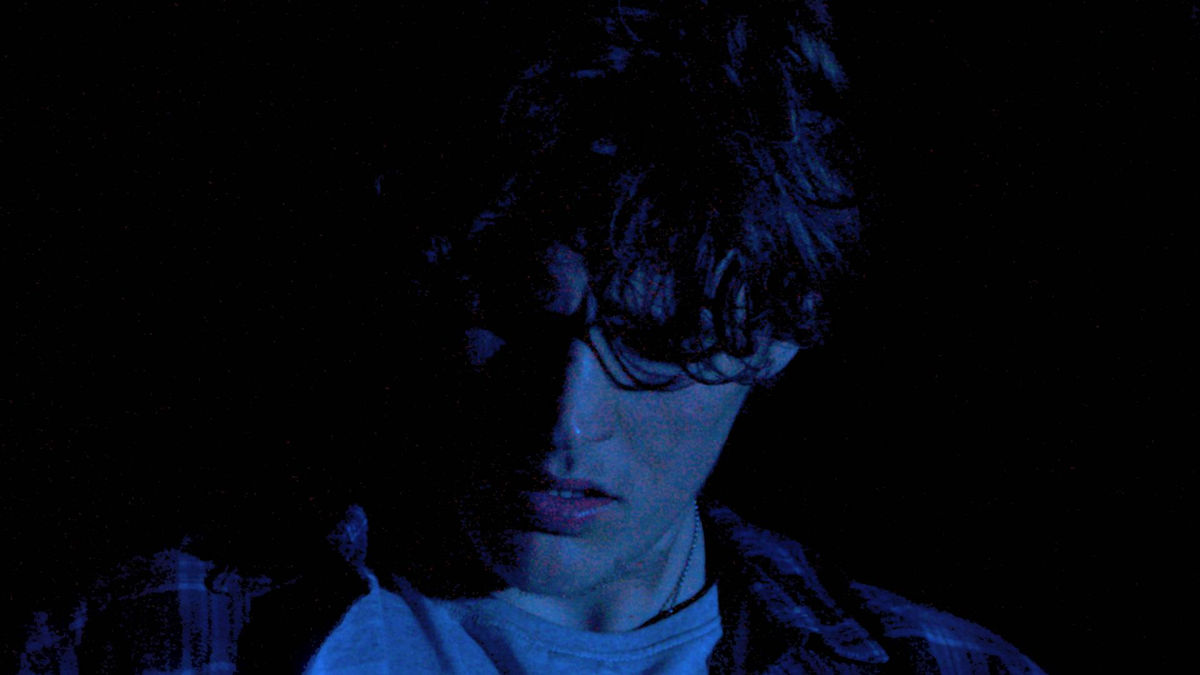
Items on this page are stills and screenshots only. The teaser keeps its earlier treatment and is not a fresh render of the v09 pass. Audio was measured but a full real-time listening review is not claimed. Source media is linked in the Premiere projects, not collected. The only film excerpt published is Blood and Sap v03, with the production team's permission.
creative outcomes
creative outcomes
Graded stills

Stills are finished camera-source photographs, separate from the scene comparisons. The film itself is not published here.
Credits
Opening credit: Solitary
Closing credits
- Director
- Keeley Cawte
- Writer
- Noah Sharling
- Producer
- Kiera Hill
- Director of Photography
- Liberty Clark
- Production Designer
- Kosmas Vorgias
- Art Assistant
- Jade Bindon
- Editor
- Georgia Barrett
- Editor
- Imogen Zanella
- Assistant Editor
- Monica Ciobo
- Sound Designer
- Imogen Zanella
- Composer
- Felix Wise
- Casting Director
- Liberty Clark
Cast
- Roland Wilson
- Michael Hawkins
- Zackery Williams
- Ryan Hisco
- Shepard
- Aurora
- Podcast Host
- Tayla Redford-Bell
Crew
- Production Manager
- Thomas White
- First Assistant Director
- Kirsty Barnes
- Camera Operator
- Thomas White
- First Assistant Camera
- Aiyana David
- Gaffer
- Monica Ciobo
- Gaffer
- Jay Switzer
- Gaffer
- Lucy Egan
- Sound Recordist
- Jackson Gibbens
- Boom-operator
- Rocina Ward
- Colourist
- Sophie Joyce
- Title Design
- Monica Ciobo
- Production Assistant
- Tristan Pinna
- Production Assistant
- Tex Hansen
- Production Assistant
- Liam Austin
- Virtual Production Environmental Artist
- Brayden Bagley
- Virtual Production Environmental Assistant
- Luca Griffo
- Virtual Production Camera Operator
- Jay Kesby
- Virtual Production Gaffer
- Tristan Pinna
- Virtual Production LX Assist
- Jordan Nichols
Script consultant
- Script Consultant
- Sue Cake
Executive producers
- Executive Producers
- Jason Tolsher; Phoebe Hart
Special thanks
James Paramour; Rob Matthews; Allan Bremner; Rhys Tyack; James Debenham; John Wang; Annabelle Rogan; Mia Cameron
A production of QUT School of Creative Arts. Filmed in The Palms QLD and QUT Virtual Production Studio.
Thanks to our donors
Noah Sharling; Don Philip Alabata; Liberty Clark; Evan Cosson; Rocina Ward; Arielle McCaul; Rob and Tanya Ward; Imogen Zanella; Keisha Rohweder; Kiera Hill; Tayla Chiu Chong; Nana Hill; Julian Hill; Bels Baker; Daryll Kinivan; Amelia McNally; Anthony McLaughlin; Josh Hill; Aretha Hill; Paul Sharling; Lily Smith; Tristan Pinna; Ronda McDonald; Annabel McCarthy; Abi Hill; Iain B MacDonald; Georgia Barrett; Conrad Cowlrick; Cathy Palmer; Sally Broad; Tulip Heuser; Sophie Joyce; Kirsty Barnes
Copyright (Keeley Cawte, Kiera Hill and Noah Sharling). No animals were harmed in the making of this film.
Credits as listed in the film's end credits. The stills and the excerpt on this page are published with the permission of the Solitary production team.
professional reflection
professional reflection
Colour, context and perception
Across narrative and experimental filmmaking, my interest lies in how audiovisual choices transform the meaning of recorded images.
My approach to colour grading is informed by a broader interest in how images acquire meaning through their relationship with sound, editing and context. I am particularly interested in the capacity of visual manipulation to alter an audience's understanding of material without changing what was originally recorded. In Solitary, this became a question of psychological perspective.
The forest remains a recognisable physical environment, yet its emotional significance changes as Roland's traumatic memories and distorted perceptions intrude upon the present. My colour-grading approach explored how variations in contrast, temperature, saturation and tonal separation could communicate those changes while maintaining the credibility of the original photography. These concerns also informed my earlier experimental short film developed in conversation with Emily Kame Kngwarreye's Earth's Creation I (1994).
Although the project had a different conceptual and ethical framework, it allowed me to investigate how recorded natural imagery could be transformed through altered temporality, chromatic abstraction, layering and the relationship between sound and image. The distinction between these projects has been particularly valuable to my development. Experimental filmmaking encourages me to question the representational limits of an image, while narrative colour grading demands that such interventions remain accountable to character, performance, continuity and the intentions of the wider production.
Together, these experiences have shaped my understanding of colour as more than an aesthetic finishing process. It is one of several interdependent elements through which filmmakers construct meaning, influence perception and guide emotional experience.